 By admin
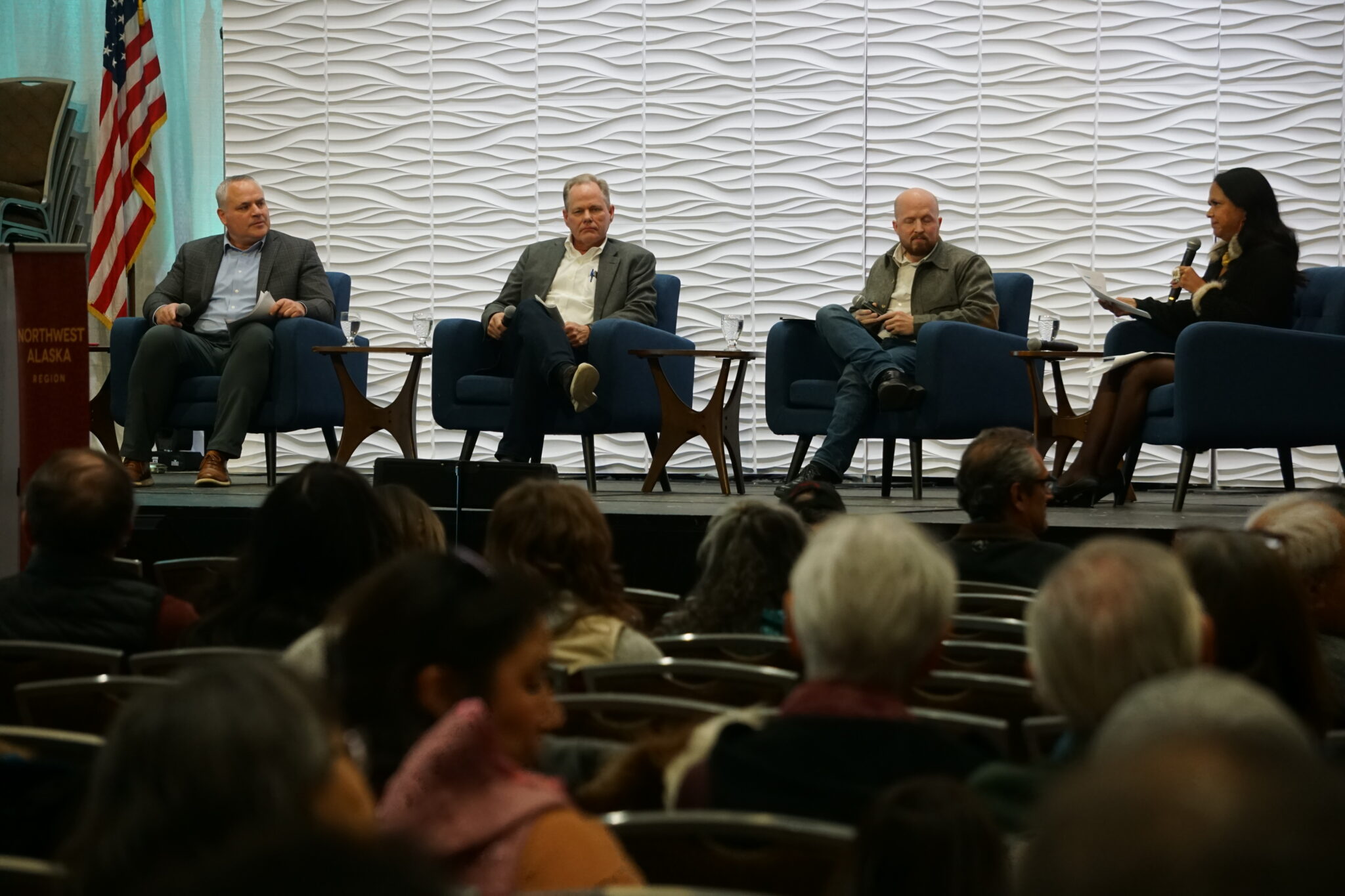
The three gubernatorial candidates who spoke Friday at the Alaska Federation of Natives convention found plenty of common ground on education, fisheries, public safety and other subjects.
Read more Alaska’s ingenuity is a national asset
But some divides emerged in what was, for the most part, a friendly and collegial panel discussion between Democrat Jonathan Kreiss-Tomkins, Republicans Dave Bronson and Treg Taylor and journalist Antonia Gonzalez, the moderator.
Bernadette Wilson, the Republican endorsed by President Donald Trump and the fourth candidate on the general election ballot, did not participate in the forum, though she visited the convention earlier in the day.
The Alaska Federation of Natives conference is the largest statewide Native organization representing more than 140,000 people, or nearly one in five Alaskans. This year marks the organization’s 60th annual convention.
For the Alaska Native audience, the most consequential disagreement that emerged between the candidates on stage concerned rights to subsistence, the traditional harvests of food and natural materials for personal and family use.
Kreiss-Tomkins, a former state lawmaker from Sitka, drew repeated applause, especially for his commitment to respect the rural preference for subsistence food-gathering rights that are enshrined in federal law. That rural preference was affirmed in 1990s-era litigation named for an Ahtna elder who was the lead plaintiff, Katie John.
Read more Analysis: Trump deportations near 1M, but few are criminals
“It should be the policy of the state of Alaska, in the Department of Law, with the attorney general and the governor, to support subsistence and not undermine the Katie John decision,” Kreiss-Tomkins said.
Left unspoken, but implied, was current Gov. Mike Dunleavy’s unsuccessful legal campaign to overturn the rural subsistence priority and grant all Alaskans subsistence rights.
Taylor, as Dunleavy’s attorney general, spearheaded that campaign, which centered on federal management of salmon fishing on the Kuskokwim River, a flashpoint for AFN and other Native organizations. He appealed the decision up to the U.S. Supreme Court in 2025.
Another difference emerged among the two Republicans on the stage.
Taylor praised the Community Development Quota system, under which quota shares for federally managed groundfish harvests are allotted to coastal Alaska community cooperatives. The program enables residents of rural coastal villages to conduct trawl harvests of groundfish or contract with trawl companies to do that.
“I love the CDQ program,” Taylor said. Rural communities’ control of the fisheries continues to grow through the program, he noted. “I can’t wait for the day when those communities own the vast majority of the commercial fleet,” he said.
Read more New geological estimate puts Alaska North Slope gas resources at 96 trillion cubic feet