 By admin
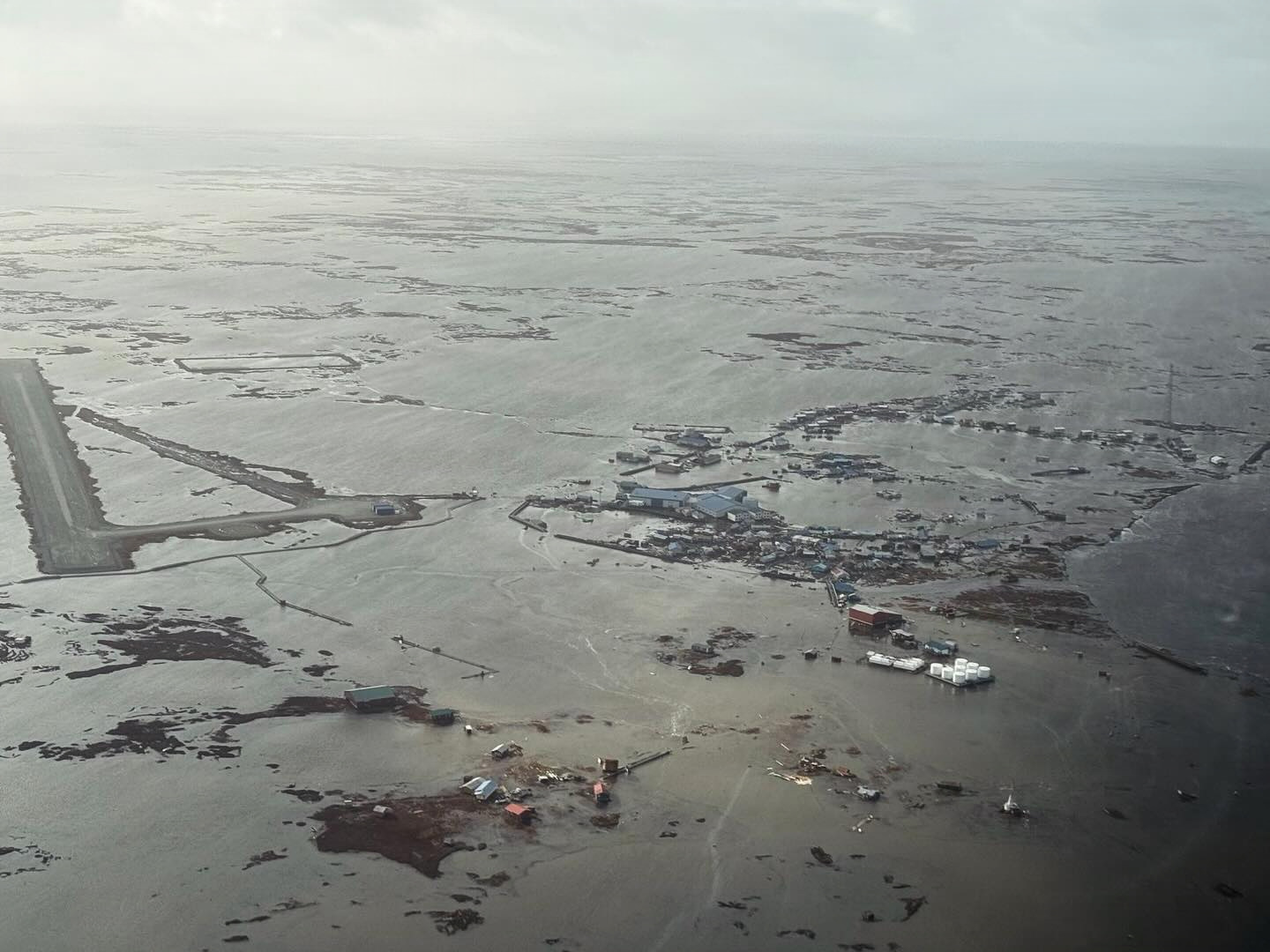
A year after a Pacific storm largely destroyed villages in Alaska’s Yukon-Kuskokwim Delta and prompted the biggest air evacuation in state history, people in the region are bracing for repeat occurrences.
Read more Cook Inlet’s gas shortage has become Fairbanks’ diesel bill
Among them is Johnny Andrew Jr. of Kwigillingok, a Yup’ik village of about 400 people, most of whom were evacuated when the storm hit. Calling into a special radio program aired by Bethel-based public broadcasting station KYUK last week, Andrew said in the past, people assumed that massive storms like ex-Typhoon Halong would be rare, separated by several years.
That is no longer a safe assumption, said Andrew, who is one of the small number of residents still in Kwigillingok and trying to clean and restore the village.
“Our world is changing, so not the same as what it used to be back then,” he said in his call to KYUK.
Three years before Kwigillingok, Kipnuk and other Yukon-Kuskokwim villages were wracked by ex-Typhoon Halong, a previous storm, ex-Typhoon Merbok, slammed into Alaska. It affected almost all of Western Alaska, but its track was a little farther north, with particularly dire impacts to the Norton Sound and Bering Strait region,
Monica Price, a member of a Yup’ik dance group that performed at last week’s Indigenous Peoples Day celebration at Alaska Pacific University in Anchorage, said people around the region are worried.
Read more Revealed: The money behind the last-minute fringe candidate ad blitz in Alaska’s U.S. Senate primary
“How do we prepare for something like this? Because if it’s not Kipnuk or Kwig, it’s going to be someplace else,” said Price, who is from Bethel.
Ex-typhoon defined
The term “ex-typhoon” is specific to a type of Pacific storm. Although the official meteorological name may seem benign, ex-typhoons can be more consequential in certain circumstances than the typhoons that spawn them.
Typhoons are cyclones caused by heat and water evaporation. They become ex-typhoons when they leave the tropics — and when they do so, they expand dramatically.
Typhoons and hurricanes have very strong winds that are concentrated in relatively small geographic areas. Ex-typhoons tend to have winds with peak levels that are not quite as strong, but they are spread over much farther distances. While typhoons draw their energy from warm ocean waters, ex-typhoons get their energy from the differences in air temperatures in the atmospheric layers. The contrast between warm and cold air causes the transition to broad-ranging ex-typhoons.
Read more Alaskans should decide the future of Alaska seabed mining