 By admin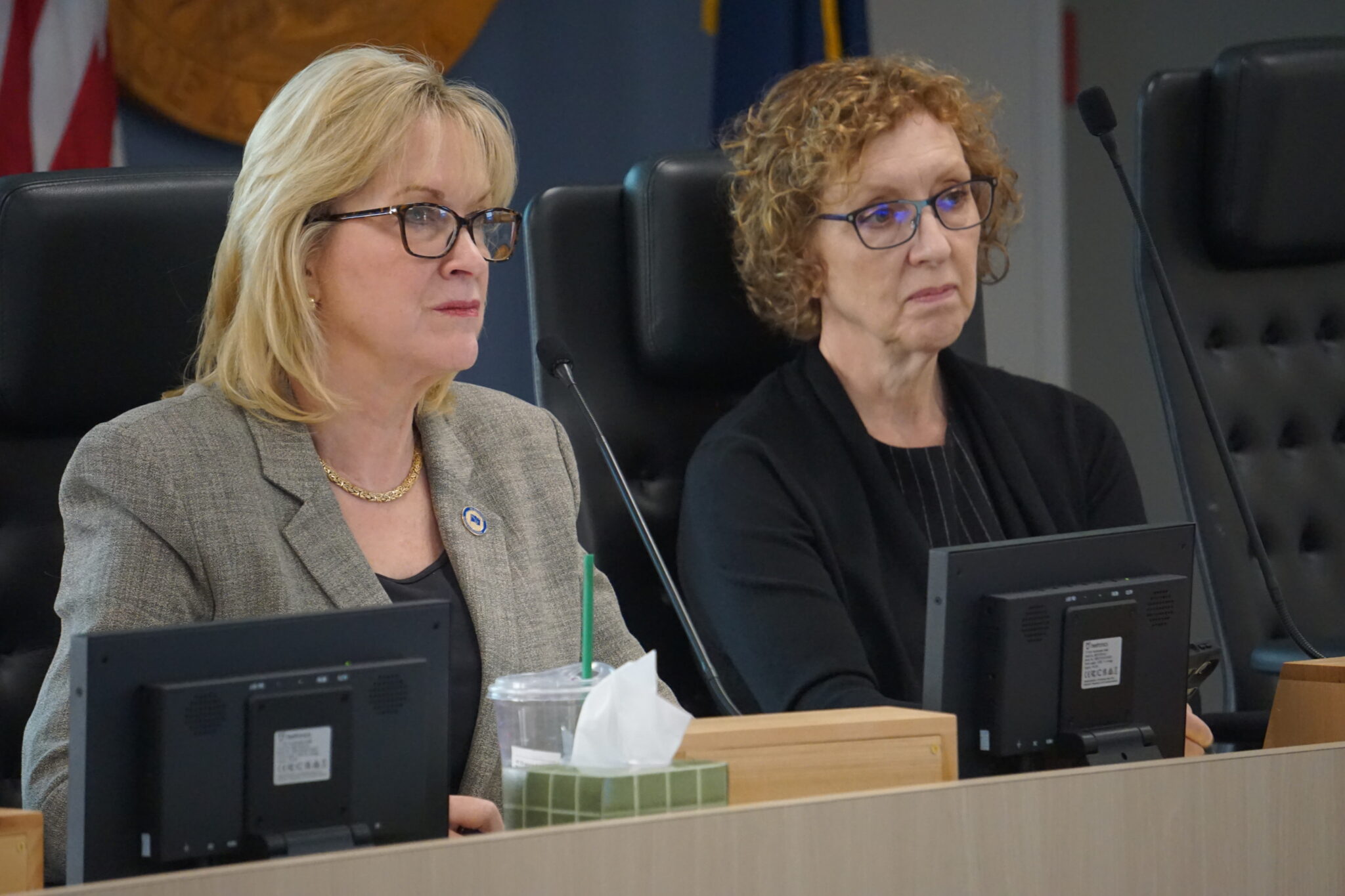
Alaskans will decide whether to overhaul the state’s elections system with a ballot measure that would repeal ranked choice voting, reinstate closed primaries and repeal campaign disclosure rules established in 2020.
Read more As winter approaches, Southcentral Alaska utilities are worried about running short of gas
Ballot Measure 2, which will appear on the ballots as 24ESEG, is one of two ballot measures that will appear on the general election ballot in November. Ballot Measure 1, which would impose campaign contribution limits, will be on the primary ballot on Aug. 18.
Officials with the Alaska Division of Elections held the first of two public hearings to gather input on the ballot measures Monday, as required by law. Campaign supporters, opponents and Alaskans called in from around the state to the Anchorage Legislative Information Office to share their views at an event chaired by Lt. Gov. Nancy Dahlstrom. A second day of public hearings for public testimony will be held on Aug. 5.
A similar ballot measure to repeal ranked choice voting was voted down in 2024 by out of 320,985 cast. Supporters quickly restarted the campaign in 2025 and collected over 34,000 signatures, required to place the issue before Alaska voters again in 2026. The measure’s primary sponsors are Republican gubernatorial candidate Bernadette Wilson, along with Judy Eledge of Anchorage and Ken McCarty of Eagle River.
If approved, Ballot Measure 2 would repeal changes established by a 2020 ballot measure. It would repeal the nonpartisan, open primary system and ranked choice general election.
Currently, Alaska voters of any party affiliation can vote for any candidate in the primary election. If approved, the measure would revert the state’s elections to the closed primary system, where only one candidate from each party advances to the general election, and parties choose who may participate in that party’s vote.
The measure would also repeal some campaign finance disclosure rules. It would repeal limits enacted by the ballot measure passed in 2020 so that individuals and entities who contribute more than $2,000 to candidates or campaigns must disclose the true source, as defined by law. According to the from the Division of Elections, the measure would remove spending limits and disclosure rules, including for digital ads, out-of-state donations, undisclosed donations and true source donations. It would also change the definition of “campaign expenditure” and remove some fines for violations.
If passed, the changes would cost the state an estimated $2.6 million to implement, the Alaska Public Offices Commission.
Read more Hire Full-Service Movers Across The USA: A Complete Guide to Apartment Moving
Supporters of the ballot measure, called the “Repeal Now” campaign, argue that ranked choice voting is confusing and burdensome to voters, and advocated for returning to the pre-2020 system.
Bethany Marcum, treasurer for Repeal Now, testified at the hearing on Monday, advocating for each voter to have a single vote for a candidate or measure. “Our campaign is about one person, one vote. That’s been the bedrock of the American Republic for the last 250 years,” she said.
Marcum argued ranking choices for candidates is complicated and voters complain about making mistakes. She objected to the tabulation system of counting up to four ranked choices.
If voters do not fill out second, third or fourth candidates, or all their candidates have been eliminated, their ballot is set aside, which Marcum objected to, falsely claiming “ballots were trashed.” But voters’ top choice candidates are counted.
She also blamed ranked choice voting for delaying election results. She said campaign disclosure rules set in 2020 hadn’t prevented “dark money,” or money whose source is secret, from flowing to Alaska, and she said the campaign finance reporting requirements are burdensome to smaller campaigns.
“So, in our opinion, the money overwhelms the disclaimer, and Alaskans recognize this. Smaller campaigns have to spend up to a third more of their money and their ad space on these disclaimers that do nothing to inform the public,” Marcum said.
Opponents of Ballot Measure 2 argue the ranked choice voting system gives voters more choices at the ballot box, and deters extreme partisans while encouraging candidates to appeal to a wider variety of voters. They argued against repealing campaign disclosure rules they say will welcome more Outside, undisclosed “dark money” into Alaska elections.
Read more Star Van Lines Movers: Your Trusted Utah Moving Company for Local and Long-Distance Relocations