 By admin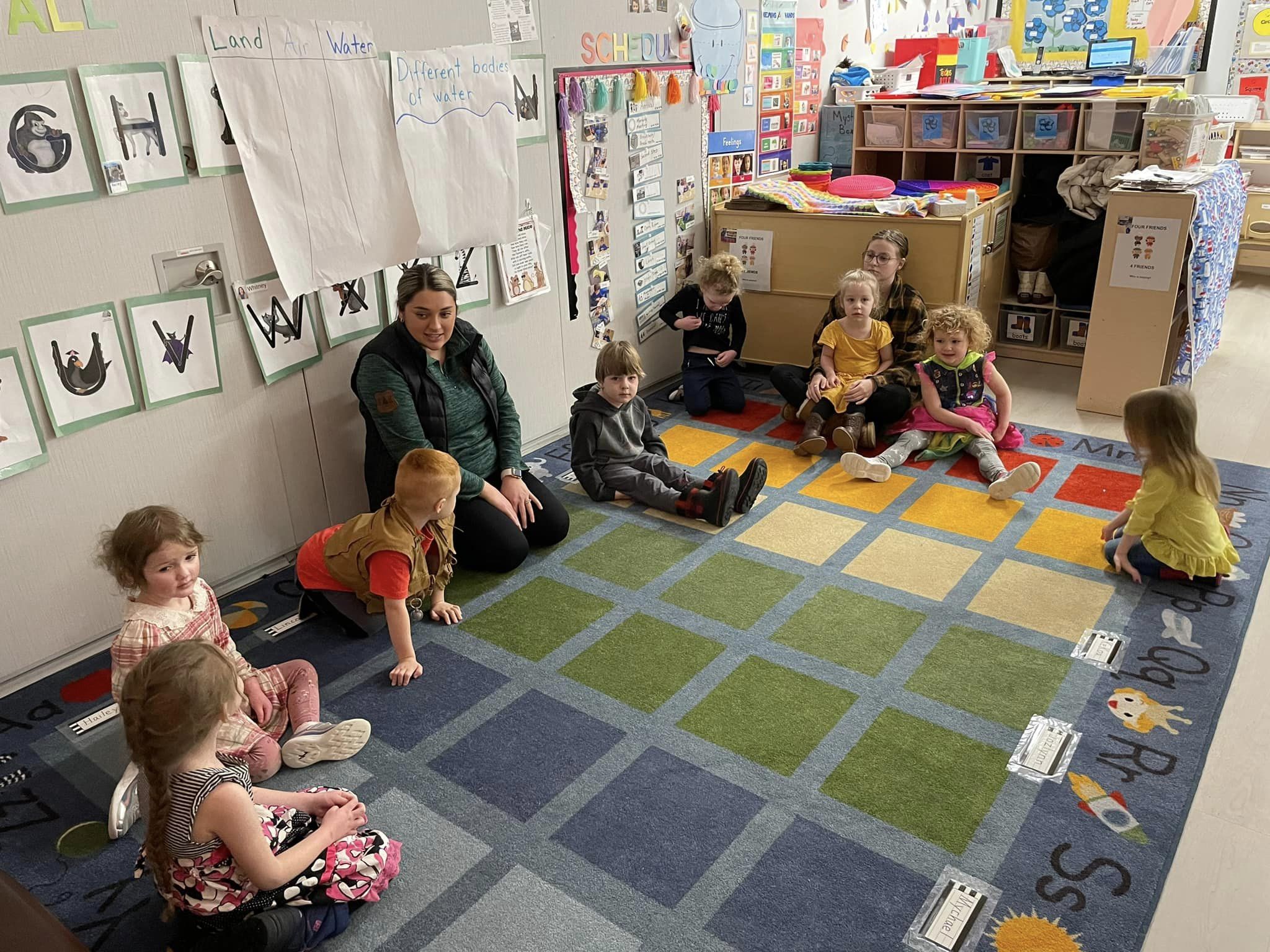
In Alaska, the gap between the need for childcare and the availability of services is growing, according to providers and national data. Some sources estimate it’s costing the state millions each year.
Read more Alaska’s energy paradox
An estimated 55% of Alaska children lack reasonable access to child care, according to by the national non-profit advocacy group First Five Years Fund. Alaska childcare providers say state and federal funding to support programs is insufficient — and that rising costs mean they are able to offer less and less.
In Alaska, 60% of children have all available parents in the workforce. The cost of center-based childcare is an estimated $12,425 and over $11,000 for home-based childcare each year.
Federal and state programs provide funding for childcare and early education, but there is only enough funding to serve a fraction of eligible families in Alaska — and cost and availability of providers across rural and urban regions of the state.
In the Matanuska-Susitna Borough region, Head Start programs that serve children from infancy to age five have had to decrease the number of children served by 38% in the last five years due to insufficient funding, said Mark Lackey, executive director of CSS Early Learning, which operates four sites in Palmer, Wasilla and Fairview.
“Because funding was not sufficient to cover inflation, from federal and state, and so our only option has been to ask the feds permission to serve fewer children while keeping our same amount of dollars,” he said.
“We are in the fastest-growing area of Alaska,” he added. “And we have been for many, many years. We have had waiting lists that entire time.”
Lackey estimates 40% to 50% of children in his Head Start programs are in foster care or unhoused. Those children are bumped to the top of the waitlist, followed by children with disabilities and from low income families. He said it’s well-known that the need for childcare in the region far outweighs the combined 230 slots they have available.
Statewide, an estimated 21% of eligible Alaska children from infancy to age three are served by Early Head Start, and 52% of eligible children from ages three to five are served by Head Start statewide in 2025, according to data from the national Office of Head Start.
Alaska’s 17 Head Start programs are funded through various state and federal funding sources. Lackey said Head Start received a 1% cost of living increase in federal funding this year. Federal funds for Head Start totalled $68.6 million this year, plus $13 million in state grants provided through the Alaska Department of Education and Early Development.
Lackey said federal and state funding have remained flat while costs have increased, including prices for food, utilities, fuel, employee salaries and health insurance.
“The cost of health insurance is just staggering,” he said. “So we’ve had to slowly give our employees less quality health insurance, you know, higher deductibles. Just like every business in Alaska, we have to make those same sacrifices, which makes recruiting and retaining our workforce even harder.”
This fiscal year, Gov. Mike Dunleavy vetoed $6.4 million for childcare provider recruitment and retention grants that was approved by the Legislature. He approved a total of $20.4 million for child care assistance. He also vetoed $3.7 million in additional funding for Head Start programs, retaining $16.75 million this year.
In his , the governor cited the need to preserve funds to support long-term fiscal stability. A spokesperson for Dunleavy’s office said on Wednesday that a bill the governor introduced, but that failed to advance in the Senate would have boosted the unemployment insurance trust fund, which supports grants for training and workforce development.
“The bill could have easily funded childcare services using surplus UI trust funds but for some reason the Legislature passed on this opportunity,” said Jeff Turner, communications director for Dunleavy, by email.
“That funding was crucial,” Lackey said of the vetoed money. “We can’t charge parents any more because they have all of these same inflationary pressures, and childcare already is expensive just to make the bottom lines work out.”
Read more The Trump administration could shut US scientists out of the next Nobel-worthy discovery
On the Kenai Peninsula, Laurie Mead has been working in early childcare for over 40 years and operates a licensed home-based child care business, Kyrie N’ Friends, serving 12 children.
“Right now, it’s just gotten harder and harder to find anyone that wants to work in the field of early childhood. It can be very rewarding, but at the same time, it’s high stress, low pay,” she said.
Mead said on average children are in her care for 10 hours a day, and while she wants to keep employees long term to maintain consistency for the children and families she has to compete with other employers who can offer higher wages and better benefits.
“It’s just a hard, hard thing to navigate. And you know, unfortunately, I would love to do it just because I love the kids, but I also need to make a wage as well,” she said.
Mead said she has a long waitlist, particularly for infants and toddlers, and some families have signed on to her waitlist as soon as they get pregnant. She said the cost of her daycare — $1,100 for an infant per month — is above what families receive in childcare assistance.
Mead said she wants to see more state investment because childcare is essential for families.
“It’s huge for them because they couldn’t put food on their table if they had one income. They just can’t do it,” she said. “It’s unfortunate, with inflation and things the way they are in America, not just Alaska. It takes two working parents now.”
Lost wages, tax revenue
The economic burden of the childcare gap is felt by households in lost wages, lost revenue for businesses and lost tax revenue.
According to from the non-profit advocacy group Child Care Trust, the earnings loss for households in Alaska over ten years is an estimated $1.1 billion.
For Joanne Glaves, a 29-year old single mother based in Wasilla, state childcare assistance and enrolling her two-year-old at Meadow Lakes Head Start operated by CSS Early Learning was crucial for her to be able to work and support her family. But she is one of a diminishing number of parents who have access to care.
“My mom had been caring for him while I was going to work, and she got sick suddenly and had to go to the hospital. And so, I lost childcare, and I ended up losing my job. And I had no idea that Head Start even existed until I started doing my own research, and I found them, and reached out,” she said.
Glaves said with state assistance, she pays $71 per month, and works full time as a peer support specialist for homeless youth at MY House in Wasilla.
“It meant the world to me, and you can’t really put a number on it when you’re under such high stress,” she said. “And just knowing he was in a safe place and really getting, I think, the best care there is at Head Start because they have developmental check-ins and things like that, and they also connect you to community resources. So they really changed my life.”
Glaves said she was inspired to get involved with Head Start and now volunteers on several parent advisory boards and this year traveled to Juneau and to Washington D.C. to advocate for more support for Head Start programs.
“It’s the foundation of our society and our communities,” she said. “If we don’t take care of the children, then what does that future look like?”
Read more Alaskans to vote on ballot measure that would overhaul state election system