 By admin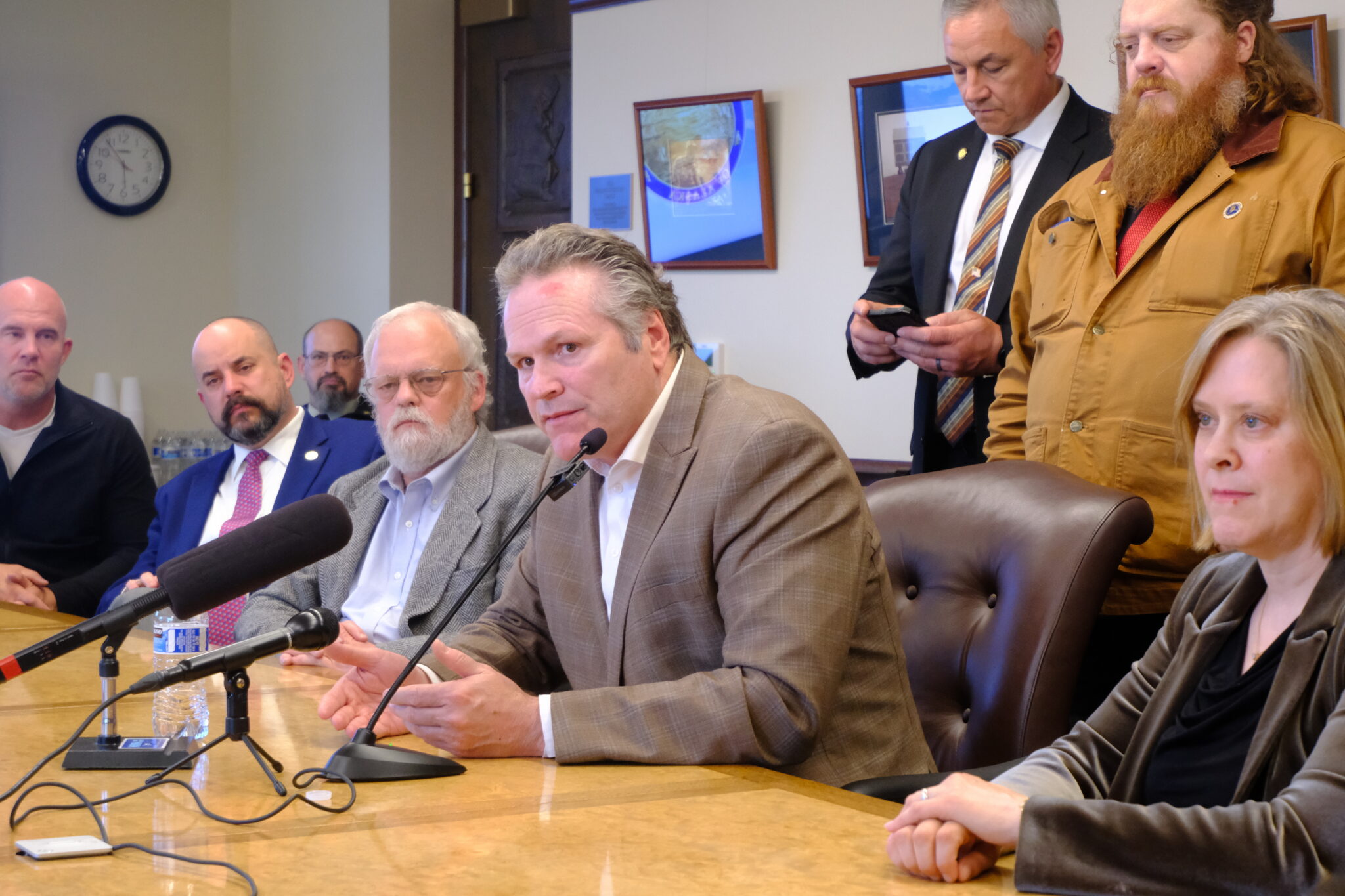
The Alaska House of Representatives on Thursday voted down a multibillion-dollar tax break for the proposed trans-Alaska natural gas pipeline project. Glenfarne LLC, the project’s lead developer, has said the tax break is necessary for it to obtain financing from banks and equity investors.
Read more Alaska’s economic development agency plans a Mat-Su industrial park, with data centers
The Alaska Senate voted 11-8 to approve a compromise version of House Bill 381, which contains the tax break. But after that vote and as the House gaveled in, Dunleavy announced he would veto the bill if it were to pass.
In a statement on social media, the governor said a provision that applies a corporate income tax to certain kinds of privately owned oil and gas companies “raises serious concerns.”
Legislators are meeting in a second 30-day special session devoted to HB 381, and Dunleavy said he will call the Legislature into a third session starting July 27.
After the governor’s message was read on the House floor, only 19 members of the House voted in favor of the bill. Twenty-one votes were needed to approve it.
Many of those who voted against the bill spoke against the provision identified by the governor, with Rep. Dan Saddler, R-Eagle River, calling it a “parasite” within a bill intended to benefit the gas pipeline.
The provision came at the insistence of state senators who said it was necessary for the bill to earn their votes.
“If you want a gas line, everybody’s got to compromise, and I think that’s ultimately what you saw today,” said Sen. Bill Wielechowski, D-Anchorage and one of the most vocal advocates of the provision questioned by the governor.
After the governor’s announcement, Senate President Gary Stevens, R-Kodiak, said he was unsure how the Senate would proceed in the next special session.
The bill could be referred back to the Senate Resources Committee, chaired by Sen. Cathy Giessel, R-Anchorage and a leading project critic. The Senate Finance Committee could consider the issue further.
Senators could simply take no action and wait for the current Legislature to end and Dunleavy to leave office in December.
“I sort of feel you need to go to the next Legislature,” Stevens said.
First gas expected before 2030, developer says
As currently planned, the Alaska LNG project would include three separate subprojects, built in two stages. Altogether, the project is expected to cost as much as $54.5 billion, making it one of the largest natural gas projects in the world.
Gas would be pumped from North Slope wells to a processing plant on the North Slope, then down a pipeline to an export facility on the Kenai Peninsula.
Developers expect to reach a final investment decision on the project’s first phase this year. It would include the pipeline, part of the North Slope processing plant and part of the export facility.
Read more Democrats have a shot at flipping state legislatures across the country
Initially, the export facility would function in reverse, as a place for Alaska to import natural gas for local use while the pipeline is under construction.
Southcentral Alaska is running short of domestic gas for heating and electricity during the winter months.
Adam Prestidge, president of Glenfarne Alaska, told state senators on June 3 that after the final investment decision, it should take about three years for construction and commissioning before gas begins flowing through the pipeline to in-state residents.
The second, export phase of the project would take several more years to complete.
Switching from a property tax to a gas tax
The main intent of the bill is to replace Alaska’s 2% petroleum property tax with a lower tax on gas shipped through the pipeline.
The pipeline is exempt from the tax during construction, but the state would start collecting taxes when gas begins flowing. Glenfarne has said that’s a problem because it won’t begin making money until exports begin several years later.
Glenfarne executives have said they cannot get financing to build the pipeline unless the tax is changed.
That led Gov. Mike Dunleavy to propose the tax change in March. Legislators were unable to pass the bill by the time the regular legislative session ended in May, and Dunleavy has now called lawmakers into special session twice to get it done.
Through 2063, according to estimates from the Alaska Department of Revenue, the tax change would reduce state revenue by $5.3 billion when compared to current law.
Because petroleum property taxes mostly go to municipalities, the amount received by cities and boroughs during that period would drop by another $5.3 billion.
Proponents of the change have focused on the benefits, rather than the lost revenue. Without the reduction, the pipeline cannot be built, they say. If the pipeline isn’t built, the state and municipalities get nothing.
“We want Alaskan gas for the Alaskan people, instead of Canadian gas for Alaskan people, instead of imports,” said Rep. Kevin McCabe, R-Big Lake, on the House floor. “It means the world to our people…lowered heating bills, a stronger economy.”
While proponents of the tax break have run a “Build the Line” ad campaign insinuating that the tax reduction would guarantee a pipeline, some state legislators say there is a low chance of a pipeline, even if the tax break becomes law.
Read more Amid political division, Alaska lawmakers close in on final compromise gasline bill