 By admin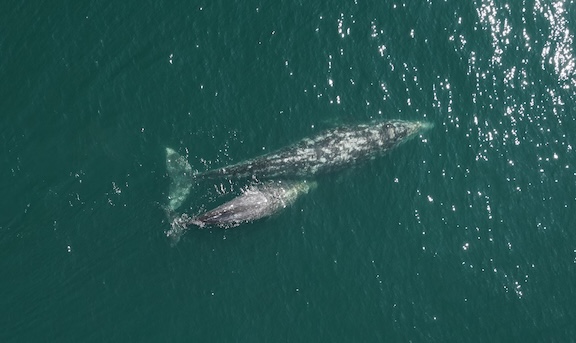
Raymond, Washington — Doug Nussbaum is a retired logger whose morning rituals include a walk down to the bluff behind his house that overlooks a bend in the Willapa River.
Read more In Alaska’s U.S. Senate race, it’s Mary Peltola, two Dan Sullivans and 12 others
He is never quite sure just what he will spot — ducks, bald eagles and sometimes seals and sea lions pursuing salmon. On April 1, he heard a breeching sound, then was stunned to see a gray whale — some 35 feet in length — swimming in circles.
This whale, skinny and malnourished, had gone catastrophically astray on a spring migration that, for most grays, starts in calving lagoons in Mexico and ends in summer feeding grounds off Alaska and northeast Russia.
For some two hours, the whale held in the bend, about 12 river miles inland from a saltwater bay. As the tide shifted, the whale made a brief push downstream, then reversed course to swim even farther upstream, lingering several days before dying in a shallow, narrow stretch of the river strewn with woody debris.
“I don’t know what turned him around. I think he knew he wasn’t going to make it, and was looking for a place to die,” Nussbaum said.
This whale is one of more than 900 eastern North Pacific grays that have been found dead along the shorelines of Mexico, Canada and the United States since 2019. Malnourishment was often a factor. Many more perished at sea as the estimated population plummeted during the past seven years from a high of more than 27,000 whales in 2016 to less than 13,000 last year.
There also has been an implosion in gray whale births. Last year’s estimated count was the lowest since federal surveys began back in 1994.
Some marine scientists first thought the gray whale population was undergoing a cyclical population downturn after a big expansion that had strained their food resources. But the whales have not bounced back, and these researchers now assign an important role in the whales’ decline to 21st century shifts in temperatures, currents and winter ice cover that have reduced their foraging success in the northern seas.
“What has changed. The obvious answer is the climate,” wrote Joshua Stewart, an assistant professor at Oregon State University’s Marine Mammal Institute, in an October 2025 article published in the Journal of Marine Science with four co-authors. “The Arctic is the most rapidly warming region on the planet…”
A fading food source off Alaska
For grays, a favored food source is amphipods, a small crustacean that whales once found in huge abundance in the Chirikov Basin, a swath of the northern Bering Sea between Russia and Alaska.
Amphipods thickly carpeted much of the basin’s sea floor. They clustered together in mud tubes that allowed them to filter feed on decaying bits of algae, which grows on the underside of sea ice then falls to the bottom.
In dives, a gray whale could suck up more than 2,000 pounds a day of the amphipods from these tubes with the aid of their baleen that filtered out sand. This protein-packed feed helped the whales build up the fat reserves they needed to power their marathon migrations back and forth to Mexican waters.
“It was this really rich area — the wheat field of the Arctic for them,” said Jacqueline Grebmeier, a University of Maryland environmental scientist who has spent more than three decades researching marine life in the northern Bering Sea.
But in the 21st century, accelerated Arctic warming reduced winter ice. In some years, it changed the timing of the melt. All of that reduced the amount of algae that reached the seafloor to nourish the amphipods.
The survival of these Chirikov Basin crustaceans also was undermined by increased current flows of warmer waters from the northern Bering Sea into the Arctic. This swept away much of the silt that the amphipods needed to build their tube structures, according to Grebmeier.
By 2010, the amphipod population in the Chirkov Basin had collapsed to only 9% of the 1984 population, according to a master’s thesis by Brian Marx, a research colleague of Grebmeier who analyzed decades of northern Bering Sea survey records.
Many gray whales responded to the radical changes in the basin by pushing farther north into the Arctic’s Chukchi and Beaufort Sea, which amid the Arctic warming had a greater inflow of nutrient rich waters that helped to support more sea life. These gray whales could find some amphipods but also had a more varied diet, which likely included krill, a free-swimming crustecean, according to Grebmeier and other marine researchers.
Surprisingly, in the aftermath of the Chirikov Basin amphipod bust documented by Marx, the gray whales initially appear to have thrived, expanding to record high levels in 2016.
But beginning in 2019, amid a severe marine heat wave that reached deep into northern waters, gray whales struggled to find enough food in the Arctic to fuel their long annual migration — even when they journeyed into the Chukchi and Beaufort Seas.
Since then, biologists on coastal surveys and in Mexico birthing lagoons have tallied increases in skinny whales with misshapen “peanut” heads that are marked by a severe loss of fat that leaves a concave depression behind their skulls.
“The common denominator is basically just not enough body fat, not enough oil in the fatty tissue that they live off — and they’re just running out of steam,” said Steve Swartz, a marine mammal scientist who has spent decades studying the gray whales in their Mexican calving grounds.
As of the end of May, 25 gray whales had washed ashore along Washington’s waterways during the spring migration period. Most of these whales had poor body condition, including the Willapa River gray, according to Cascadia Research Collective, a Washington-based scientific organization authorized by federal fishery officials to conduct necropsies.
The gray whale carcasses are sometimes left to decompose. Three weeks after its death, the Willapa River gray remains were decaying along a river bank near a boat ramp.
Fifty miles to the northeast, in the resort community of Ocean Shores, Washington, city officials opted for a different approach to disposing of three dead grays that washed up on a prime stretch of beach. They hired an excavator crew to attach cables to the whales, then dragged the carcasses into nearby sand dunes and buried them in pits.
“This is specialized work. They charged us $1,500 per whale,” said Scott Andersen, Ocean Shore’s city administrator.
Hunting the grays
In the 19th and early 20th centuries, commercial whalers targeted grays largely for their oil, which was used in lamps and lubricants, as well as baleen that ended up in corsets, umbrellas and even buggy whips.
The hunts nearly wiped out the eastern North Pacific whale populations. By the 1930s, researchers estimate that just a few thousand, or less, remained, the risk of extinction prompted an international agreement to end commercial whaling.
Read more In bid for re-election, Alaska U.S. Rep. Nick Begich defends against 14 challengers
These gray whales, in the decades that followed, staged a remarkable resurgence. By 1994, with their population estimated at more than 20,000, they were removed from the U.S. Endangered Species Act listing in one of the most notable marine conservation successes of the last century.
Under the regulation of the International Whaling Commission, subsistence hunting of grays by the Russian indigenous people of the Chukotka region has been allowed to continue.
During the past quarter century, the Russians have averaged 125 whales landed each year, according to Russian reports to the commission.
I witnessed one of these hunts during a reporting trip to Chukotka in 2000, when relations between the U.S. and Russia had improved enough to travel there via a brief charter flight from the northwest Alaska town of Nome.
The Novoe Chaplino villagers were in dire straits, lacking many of the foodstuffs that had been delivered during the Soviet era. They were able to reclaim their subsistence roots with some assistance from Alaska Inupiat whalers who provided darting guns and projectiles.
The gray whales remain an important source of food for the coastal villages of Chukotka, according to Russian reports to the International Whaling Commission. But in recent years, as the gray whale population has tumbled, some U.S. scientists have expressed concerns about the impacts of whaling, along with other human activities, such as ship strikes and fishing gear entanglements.
They include Swartz and his Mexican colleagues who study the whales in Laguna San Ignacio, a major calving area that provides warm waters shielded from orca predators that roam further north. In these lagoons, gray whales breed — and after a year’ s gestation — give birth to calves that drink a high-fat milk that enables them to triple their weight before joining in the spring, north-bound migration.
During the past decade, Swartz observed huge reductions in the number of gray whales giving birth, along with increases in the numbers of skinny whales as well as those that appear to be a reasonable weight but do not bear calves.
That stark trend is also evident in the broader calf count conducted by NOAA Fisheries biologists at Piedras Blancas Lighthouse Station in central California, where they track calves migrating north each spring. In 2025, NOAA estimated there were just 85 calves — down nearly 95 percent from more than 1,500 estimated in 2015. This year, calf counts also are expected to be low.
“Let’s get real here,” Swartz said. “The whales are having a really rough time.”
Last August, Swartz, along with a Canadian and Mexican colleague, sent an open “letter of concern” to the International Whaling Commission urging a review of gray whale biology and their management.
That letter got a cool response from Dennis Litovka, a Russian scientist who directs the Chukotka Arctic Scientific Center and serves on the whaling commission’s scientific review committee.
“We don’t accept and cannot support such (an) idea,” Litovka wrote in response to questions from this reporter about the letter of concern.
In his comments, Litovka wrote about the importance of gray whales to the Chukotka villagers and whalers with whom he had lived and worked “shoulder to shoulder.” He said that Russian scientists do not see dramatic changes in a Chukotka bay frequented by gray whales. As for quota reductions, they should be made “only very exceptionally,” and as a last resort if gray whale populations continue to decline, Litovka wrote.
Litovka serves on the whaling commission’s science committee that in 2024 concluded that, despite the die off, the gray whale population can sustain the authorized hunt levels, currently a maximum of 840 whales over six years when a small number reserved for Washington’s Makah Indians are included. The scientists met last May for a meeting that included a gray whale review. But the commission is not scheduled to revisit the gray whale subsistence quota until 2030.
Foraging in the Pacific Northwest
For decades, whale researchers have reported that some gray whales may opt out of the long migration to the Arctic to feed in other locations. They include more than 200 whales that spend much of their time foraging off northern California, Oregon, Washington, British Columbia and Southeast Alaska.
A much smaller group ventures deep into Puget Sound to spend part of the year pursuing ghost shrimp in shallow coastal waters that turn to mudflats during low tide.
“We call it a high-risk feeding strategy because they may be a mile away from safe water, and as the tide goes out, they’ve got to get out before they get stranded,” said John Calambokidis, a senior research biologist at Cascadia Research Collective.
Other gray whales that forage in Pacific Northwest waters have become skilled, versatile foragers. They filter feed on crab larvae and skim feed through kelp beds for mysids, a shrimp-like crustacean.
Amid the overall decline of the gray whale population, the numbers feeding in the Pacific Northwest have been stable.
“They have looked very good,” Jeff Harris, a NOAA Fisheries biologist who surveyed large areas of Northwest coastal waters frequented by the grays.
Some gray whales that have long fed in the Arctic are also trying to feed along the West Coast to gain an energy boost for their migration. Since 2018, there has been an increase in whales venturing into San Francisco Bay, where they are at high risk of getting killed by vessels. In an article published in April in the Frontiers of Marine Science, researchers identified 114 whales that entered between 2018 and 2025 and found that 18 of them later died within the bay.
If conditions don’t improve in the Arctic, more whales may opt to feed in the Pacific Northwest. But the Pacific ocean off Oregon and Washington has a narrow continental shelf that limits the prime foraging for grays, so it’s not likely to provide enough food for a much larger gray whale population.
But another big climate event could soon make life more difficult for gray whales. As early as July, marine forecasters are expecting a powerful El Nino marked by weakening trade winds that would send warm Pacific waters to the West Coast and the Bering Sea.
El Ninos typically weaken, and sometimes curtail, nutrient-rich upwellings of cold water that are vital to the marine food chain that supports gray whales. This one, according to some models, could be one of the strongest on record.
“I think it’s just going to shake up the whole ocean,” said Harris, the NOAA biologist. “A lot of species are going to be struggling.”
Read more Alaska’s oldest original lighthouse opens to the public
YOU MAKE OUR WORK POSSIBLE.