 By admin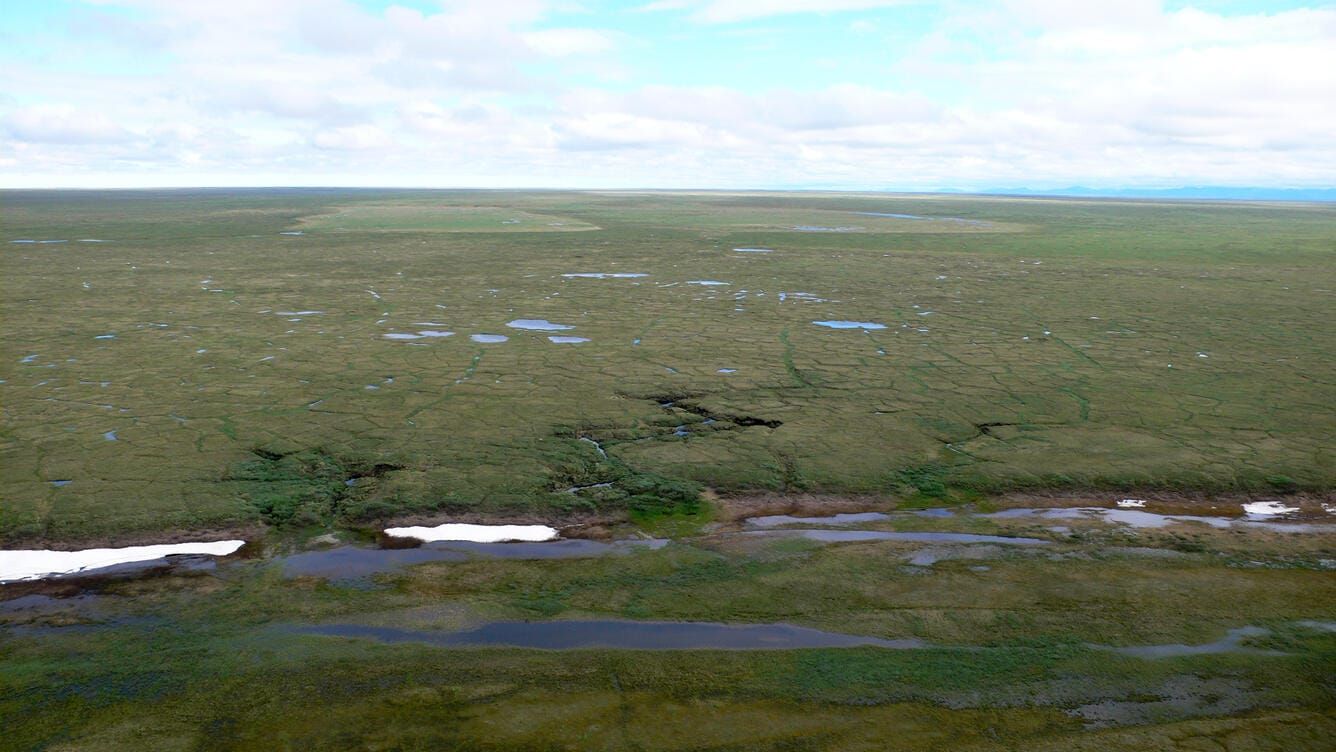
The board of Alaska’s economic development agency on Wednesday approved spending up to $190 million to advance contentious plans for oil exploration and leasing in the Arctic National Wildlife Refuge.
Read more Shifting attitudes on menopause drive lawmakers to push for new protections
The budget, proposed by staff, includes up to $175 million for a type of preliminary exploration called seismic testing, which employs sound waves to identify oil and gas deposits deep underground.
Board members also authorized the agency to spend up to $15 million to bid on new areas of the refuge’s coastal plain — a swath of tundra along its northern edge — in an ongoing federal lease sale.
The board of the Alaska Industrial Development and Export Authority, or AIDEA, voted 6-1 in favor of the proposal, marking a step toward development in the refuge.
“We have studied this for a long time, and the time for studying is over,” said board member Albert Fogle. “It’s time for development.”
Board member Andrew Guy, president of the Indigenous-owned Calista Corp. in Western Alaska, was the sole vote against the proposal, citing a lack of detail.
Currently no oil is produced in the refuge, a South Carolina-sized federal wildlife area in Alaska’s northeastern corner.
Opening it to drilling has long been a goal of Alaska politicians and local Iñupiaq leaders, including in the only village located within the refuge, Kaktovik.
“Development is not theoretical for Kaktovik. It’s a pathway to self-determination and local jobs, and long-term stability,” Charles Lampe, chief executive of Kaktovik Iñupiat Corporation, said in a presentation at Wednesday’s meeting.
But proposed oil development also has generated intense opposition from conservation groups and Gwich’in leaders in the state’s Interior, who say that drilling would threaten wildlife and the refuge’s wilderness character.
The Trump administration held the first ever lease sale in the refuge in 2021, garnering minimal interest from oil companies. AIDEA was the top bidder, purchasing leases across 365,000 acres of the coastal plain.
Read more Alaska Senate advances bill to expand early interventions for children with developmental delays
The Trump administration is currently taking sealed bids on another 700,000 acres. Results will be announced June 5.
Prior to Wednesday’s decision, AIDEA had been studying existing data on the area’s geology, according to the authority’s director, Randy Ruaro.
It commissioned a report last year that noted significant new oil and gas discoveries on state lands nearby and described the coastal plain as the “most prospective” unexplored area onshore in North America.
But critics, including several who testified at Wednesday’s meeting, question whether officials should spend public funds on new leases and exploration — which comes with no guarantee of future profits or finding economic deposits of oil.
“We should be looking at other more sustainable, renewable ways to invest our money,” said Tonya Garnett, who is Gwich’in from Arctic Village, a community near the southern edge of the refuge. “This is not a smart decision to go in there and ruin an ecosystem that provides resources for thousands of years.”
The resolution that passed Wednesday authorizes AIDEA to spend money on “permitting and regulatory work” and “the acquisition, processing and interpretation” of advanced seismic data. It does not authorize “drilling or well execution” — though one board member, at the meeting, urged AIDEA’s staff to start looking for a drilling rig.
Fogle said he expects AIDEA staff to put together “a more detailed plan” for its exploration program by the agency’s next board meeting, in June.
“I want to see that in a relatively short amount of time,” he said. “We have wasted two years of not moving quick enough.”
Northern Journal contributor Max Graham can be reached at [email protected]. He’s interested in any and all mining related stories, as well as introductory meetings with people in and around the industry.
This article was originally published in Northern Journal, a newsletter from Nathaniel Herz. Subscribe at this link.
Read more Unusual activity at Alaska volcano prompts extra look at remote peak